
Written by Mike Kriel, CEO of Launch Workplaces
Does every management agreement need to be a 10-year deal? Absolutely not. But that’s what a lot of landlords and building owners still assume going into a flex partnership conversation.
In this market, especially, that assumption might be causing you to miss out on a shorter-term fix to some of your current challenges.
The Market Is Forcing a Different Conversation
I have a number of deals in motion right now where the first conversation with a building owner doesn’t start with “let’s maximize my long-term value.” It starts with “we’re trying to transition this building” or “we’re trying to minimize our downside.” Those are very different conversations, and they call for very different deal structures.
Buildings have vacancy. Often, they’re huge ones.
Some owners are repositioning. Some are bridging a sale or refinance. Some are simply trying to stop the bleeding while the market sorts itself out.
A 10-year management agreement is overkill for any of those situations. A shorter-term agreement with a flex operator is often a much better fit.
What Landlords Actually Want (And Aren’t Always Saying)
Here’s where landlords need to be honest with themselves before they reach out to an operator. What are you actually trying to accomplish?
If you want a short-term solution to fill a gap, say so. If you want to test flex in your building before committing long-term, say so. If you’re in transition and need 24, 36, or 48 months of stability, say so.
When you tell an operator, “I want to do a flexible arrangement in this building,” you’re going to get a default answer. Probably a 10-year proposal. That’s what most operators pitch when they don’t know any better.
But if you come to that same operator and say, “Would you consider a three-to-five-year deal?” or “Would you consider a phased approach?”, you immediately weed out the operators who can’t think creatively from the ones who can. That tells you something important about who you actually want to partner with.
Why Shorter Terms Work for Both Landlords and Operators
The fear with shorter agreements is usually that one side is going to get burned. The operator worries about investing in a buildout they can’t recoup. The landlord worries about getting locked into something they can’t get out of.
Both of those are solvable.
Automatic extensions in the agreement protect the operator. If the relationship is working, the deal extends. The operator gets the runway they need to make the investment worthwhile.
Clearly defined exit terms protect the landlord. If the market turns and you want to reposition the asset, you have a path out. No surprises.
A well-structured, shorter-term agreement gives you real flexibility. In this market, that might be exactly what your building needs.
Get Your Internal Team Aligned First
One thing I see often is landlords reaching out to operators before their own team is on the same page. Your in-house leasing team is usually the last to come around to flex. They’re optimists. They believe the next deal is right around the corner. And they should believe that, because it’s their job to.
But if your leasing team has been telling you for 18 or 24 months that the deal is coming, and the deal isn’t coming, that’s worth paying attention to. Get your team in the room. Talk through the options. Look at the numbers. Decide as a group what you’re willing to consider, and what you’re not.
Then go talk to operators.
How to Start the Conversation
When you’re ready to reach out, lead with what you’re hoping for, not what you assume the answer has to be.
“We’re hoping to do X amount of square feet for 24 to 48 months while we evaluate longer-term options. Is that something you’d consider? What would that look like?”
That kind of opening invites a real conversation. The operator can come back with their honest perspective. You can compare answers across operators and figure out who’s actually flexible and who’s just saying the right things.
That’s how good partnerships start.
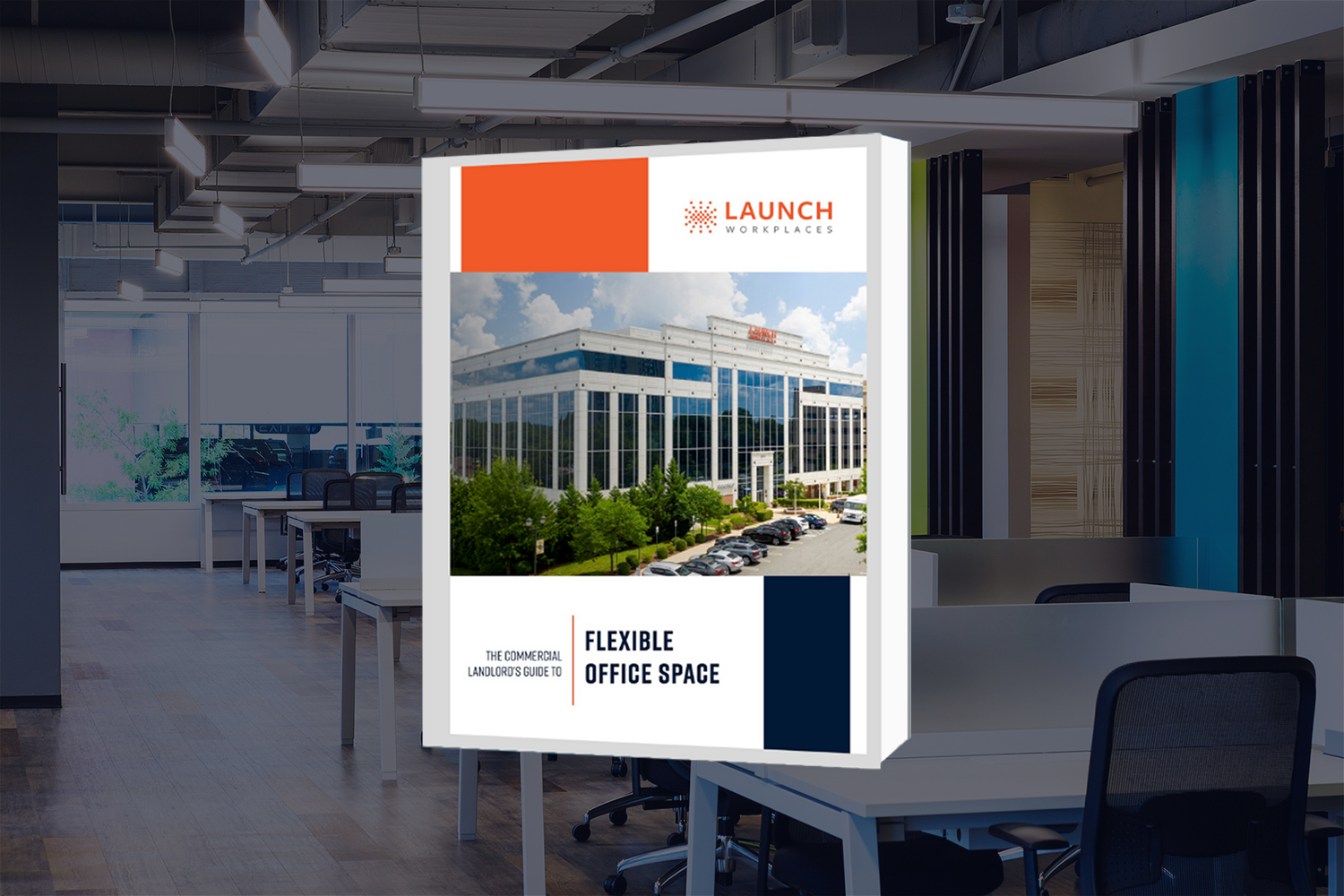
If you’re a landlord trying to figure out whether flex is right for your building, we put together a 50+ page ebook on exactly this. It covers what to look for in an operator, how to evaluate the relationship, and how to structure agreements that work for both sides.
If you want to learn more about how flexible office space can work for your building, download our free ebook, The Commercial Landlord’s Guide to Flexible Office Space. And check out the full Flex in Five series on YouTube for more.